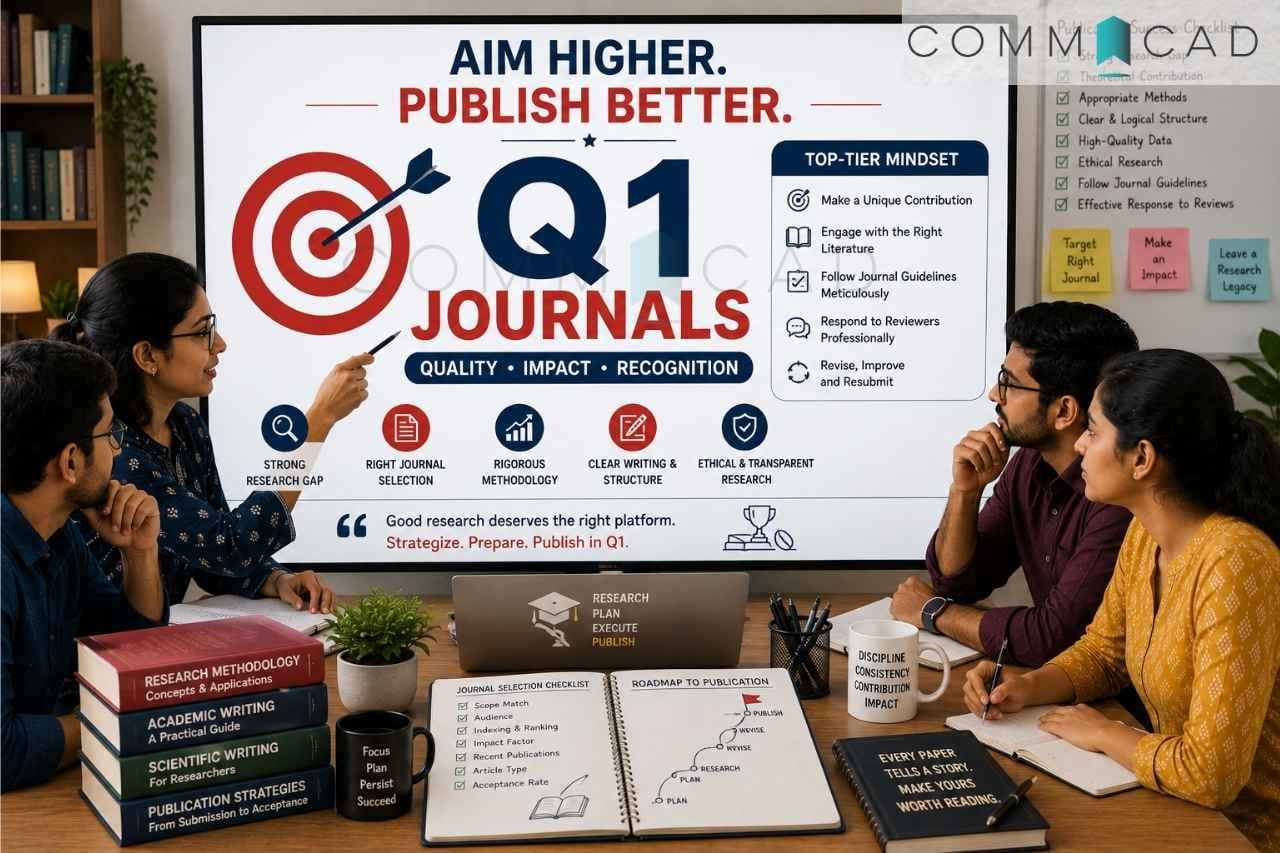
How to Increase Your Chances of Publishing in Top-Tier Academic Journals
For many researchers, completing a study is only half the journey. The real challenge often begins when it is time to publish.
Despite investing months or even years, into research, many manuscripts are rejected before they reach publication. While rejection can feel discouraging, it is important to recognize that successful publication is rarely determined by luck. More often, it reflects a combination of strong research design, strategic journal selection, clear writing, and persistence.
The good news is that many of the factors influencing publication success are within a researcher’s control.
Whether you are a postgraduate student, doctoral scholar, early-career faculty member, or experienced researcher, understanding what top-tier journals look for can significantly improve your chances of publication.
What Makes a Journal "Top-Tier"?
Researchers often associate top-tier journals with indexing databases, impact factors, or rankings. While these indicators are important, high-quality journals typically share several characteristics:
Rigorous peer-review processes
Strong editorial standards
High-quality published research
Broad academic visibility
Meaningful contributions to their field
Top-tier journals seek manuscripts that do more than report findings—they seek studies that advance knowledge, address important problems, and contribute to ongoing scholarly conversations.
1. Start with a Strong Research Question
Many publication challenges can be traced back to the earliest stage of a project: the research question.
A strong research question should be:
Clear and focused
Relevant to current academic discussions
Grounded in existing literature
Capable of generating meaningful insights
Before beginning a study, researchers should ask:
Does this topic address a genuine knowledge gap?
Why does this question matter?
Who will benefit from the findings?
A well-defined research question creates a stronger foundation for publication success.
2. Build Your Study on a Genuine Research Gap
One of the most common reasons manuscripts struggle during peer review is the lack of a clearly articulated contribution.
Reviewers frequently ask:
"What does this study add that we do not already know?"
A thorough literature review helps researchers identify:
Understudied populations
Methodological limitations in previous studies
Contradictory findings
Contexts that have received limited attention
Emerging areas requiring further investigation
The stronger the research gap, the stronger the justification for publication.
3. Choose the Right Journal Before You Start Writing
A common mistake among researchers is selecting a journal only after the manuscript has been completed.
Instead, journal selection should begin early.
Consider:
Journal scope and aims
Target audience
Types of studies commonly published
Methodological preferences
Word count and formatting requirements
Even excellent research may be rejected if it does not align with the journal’s scope.
Publication success is often about finding the right fit rather than simply targeting the highest-ranked journal.
4. Focus on Clarity, Not Complexity
Researchers sometimes assume that academic writing must be highly technical or overly complex.
In reality, reviewers appreciate manuscripts that are:
Well organized
Easy to follow
Logically structured
Clear in their arguments
Strong manuscripts communicate complex ideas clearly.
Before submission, ask:
Is the research objective obvious?
Are methods described clearly?
Do results directly answer the research questions?
Are conclusions supported by evidence?
Clear writing improves both reviewer experience and manuscript impact.
5. Follow Author Guidelines Carefully
Journal guidelines exist for a reason.
Editors often screen manuscripts before peer review, and avoidable formatting issues can create negative first impressions.
Pay close attention to:
Reference style
Manuscript structure
Figure and table requirements
Word limits
Ethical declarations
Reporting guidelines
Attention to detail demonstrates professionalism and respect for the journal's processes.
6. Understand the Peer Review Process
Peer review is often viewed as an obstacle, but its primary purpose is to improve the quality of research.
Reviewers typically evaluate:
Originality
Methodological rigor
Clarity of presentation
Relevance to the journal
Contribution to knowledge
Critical feedback should not be viewed as a personal criticism. Instead, it provides an opportunity to strengthen the manuscript.
Many published papers underwent substantial revisions before acceptance.
7. Learn How to Respond to Reviewer Comments
Receiving reviewer comments can be intimidating, especially for first-time authors.
Effective responses should be:
Professional
Respectful
Detailed
Evidence-based
When addressing comments:
Respond to every point systematically
Explain changes clearly
Provide justification when disagreeing
Maintain a constructive tone
A thoughtful response letter often plays a significant role in final publication decisions.
8. Avoid Predatory and Low-Quality Journals
Researchers are increasingly targeted by journals that promise rapid publication with little or no peer review.
Warning signs include:
Unrealistic publication timelines
Excessive publication fees without transparency
Poor website quality
Unclear editorial boards
Aggressive email solicitations
Before submission, always verify a journal’s credibility and reputation within your field.
Publishing in reputable journals protects both your research and your academic reputation.
9. Accept Rejection as Part of the Research Journey
Even experienced researchers receive manuscript rejections.
A rejection does not necessarily indicate poor research. It may result from:
Journal scope mismatch
Reviewer preferences
Editorial priorities
Timing and competition
Successful researchers view rejection as feedback rather than failure.
Each submission, revision, and resubmission contributes to professional growth and improved publication outcomes.
Final Thoughts
Publishing in top-tier academic journals is a challenging but achievable goal. While there is no guaranteed formula for acceptance, researchers can significantly improve their chances by focusing on strong research questions, meaningful contributions, strategic journal selection, clear writing, and thoughtful engagement with the peer review process.
Publication is not simply about getting a paper accepted. It is about contributing valuable knowledge to your field and participating in the ongoing advancement of scholarship.
The path may involve revisions, setbacks, and persistence, but for researchers committed to quality, those efforts are often rewarded with stronger research and greater impact.
-Commacad Experts Team