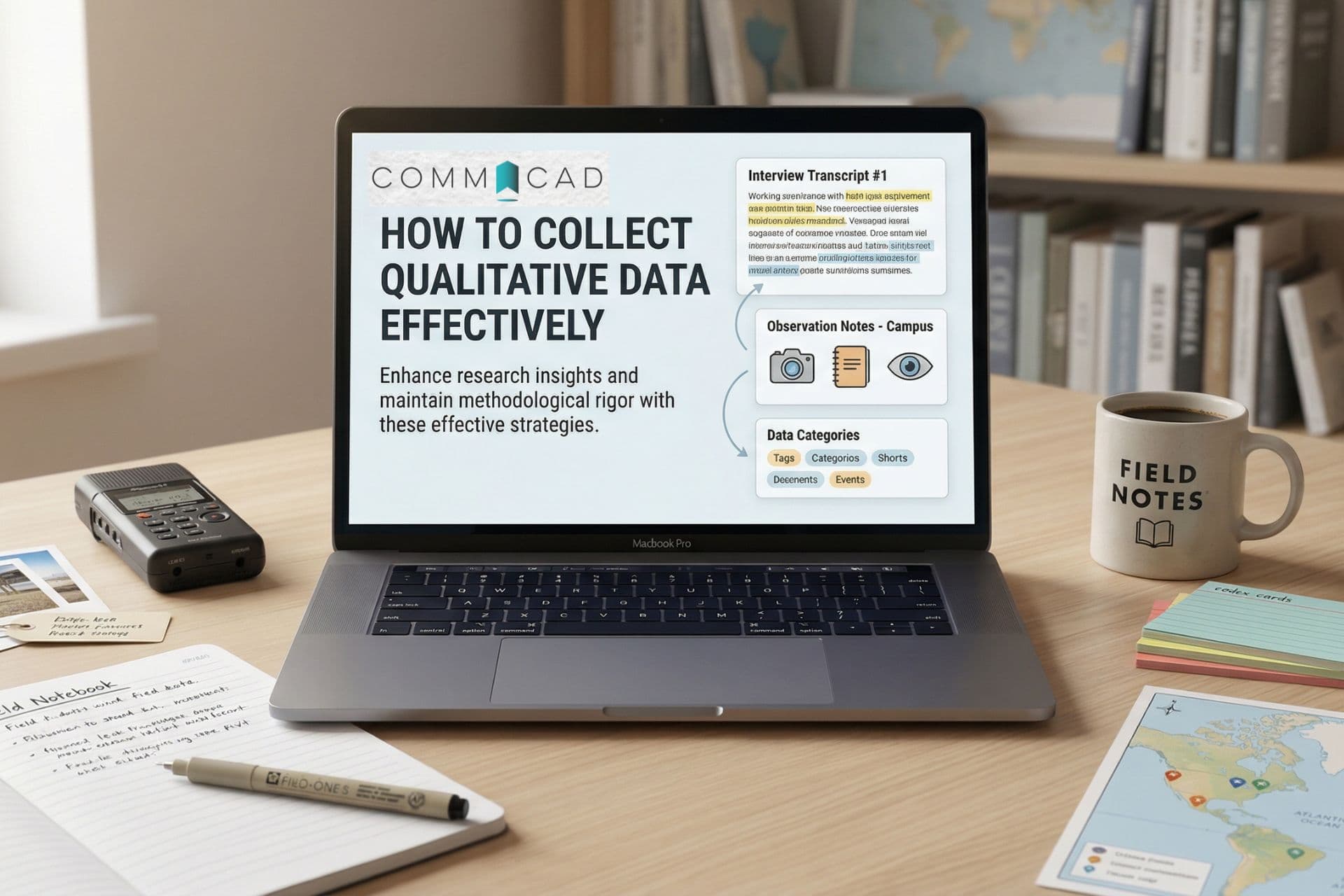
How to Collect Qualitative Data Effectively
In research, not all questions can be answered with numbers. Some require depth, context, and human experience. This is where qualitative data collection becomes essential.
Whether you are exploring perceptions, behaviours, experiences, or complex social phenomena, the strength of your study lies in how thoughtfully you collect your data. A well-designed qualitative strategy does more than gather responses, it uncovers insights.
This guide will help you understand how to design effective qualitative data collection strategies that are methodologically sound and practically feasible.
What is Qualitative Data Collection?
Qualitative data collection involves gathering non-numerical information to understand concepts, opinions, or experiences.
It focuses on:
“Why” something happens
“How” people experience a phenomenon
Contextual and subjective insights
Unlike quantitative methods, qualitative research prioritizes depth over breadth.
Why Strategy Matters in Qualitative Research
A common misconception is that qualitative research is flexible and therefore less structured. In reality, it requires even more intentional planning.
A clear strategy helps you:
Align data collection with research objectives
Choose appropriate methods
Ensure richness and relevance of data
Maintain ethical and methodological rigor
Without a strategy, qualitative data can quickly become overwhelming and unfocused.
Step-by-Step Guide to Designing Qualitative Data Collection Strategies
1. Start with a Clear Research Objective
Before choosing any method, define:
What do you want to explore?
What kind of insights are you seeking?
Example:
Instead of “Study student stress,” refine it to:
→ “Explore how postgraduate students experience and cope with academic stress.”
Clarity at this stage guides all further decisions.
2. Choose the Right Data Collection Method
Your method should match your research question.
Common Qualitative Methods
a. In-depth Interviews
One-on-one, detailed conversations
Best for personal experiences and sensitive topics
b. Focus Group Discussions (FGDs)
Group-based interaction
Useful for exploring shared views and dynamics
c. Observations
Watching behaviours in natural settings
Ideal for behavioural or contextual studies
d. Document / Content Analysis
Analysing existing texts, reports, or media
3. Develop a Data Collection Tool (Interview Guide / Checklist)
Unlike structured questionnaires, qualitative tools are flexible but guided.
Your tool should include:
Open-ended questions
Probing prompts
Logical flow of topics
Example:
“Can you describe your experience with…?”
“What challenges did you face?”
“How did you respond to that situation?”
Avoid rigid scripting, focus on guided exploration.
4. Sampling Strategy: Who Will You Talk To?
Qualitative research uses purposeful sampling, not random sampling.
Common approaches:
Purposive sampling → selecting participants with relevant experience
Snowball sampling → participants refer others
Maximum variation sampling → capturing diverse perspectives
The goal is not quantity, but rich and relevant information.
5. Ensure Data Saturation
You don’t need large sample sizes, but you do need sufficient depth.
Data collection continues until:
No new themes emerge
Responses become repetitive
This is known as data saturation, a key quality indicator in qualitative research.
6. Plan for Ethical Considerations
Qualitative research often deals with personal experiences, making ethics crucial.
Ensure:
Informed consent
Confidentiality and anonymity
Voluntary participation
Sensitivity to participants’ comfort
Ethical clarity builds trust, and better data.
7. Prepare for Data Recording and Management
Decide how you will capture data:
Audio recordings
Field notes
Transcriptions
Organizing data early prevents chaos during analysis.
8. Be Reflexive as a Researcher
In qualitative research, you are part of the research process.
Be aware of:
Your biases
Your assumptions
Your influence on participants
Reflexivity improves credibility and transparency.
Common Mistakes to Avoid
Asking closed-ended questions
Over-structuring interviews (losing depth)
Ignoring probing
Choosing participants without clear criteria
Collecting too much unfocused data
Not planning analysis in advance
A key principle:
Collect only what you can meaningfully analyse.
Linking Data Collection to Analysis
Your data collection strategy should always align with your analysis approach.
For example:
Thematic analysis requires rich, descriptive data
Narrative analysis requires detailed personal accounts
Poorly collected data leads to weak analysis, no matter how advanced your methods are.
Final Thoughts
Qualitative data collection is not just about asking questions, it’s about creating the right environment for meaningful conversations and insights.
When done well, it allows you to capture the depth and complexity of human experiences in ways that numbers alone cannot.
As a researcher, investing time in designing a thoughtful qualitative strategy will not only improve your data, but also elevate the overall quality and impact of your research.